
Allow shoes and insoles to dry completely
Remove any loose insoles, open up the pair and do not wear them again until the lining feels dry.
Smelly shoes usually occur when bacteria break down sweat and skin flakes in a warm, damp shoe. Allow shoes to dry completely, change pairs daily and treat the insole and lining as well.
Do your feet and socks quickly become damp? Take steps to reduce excessive foot sweating as well.
Fresh sweat has very little smell. The typical odour develops when sweat and skin flakes remain in the lining and bacteria break down this material.
Tight or poorly ventilated shoes take longer to dry. Wearing the same pair every day also gives the insole and lining little time to get rid of moisture.

Start by drying and changing the area. Only then should you apply a product suitable for the area where the problem keeps recurring.
Remove any loose insoles, open up the pair and do not wear them again until the lining feels dry.
Wear clean socks and do not wear the same pair every day. Allow each pair sufficient time to dry completely.
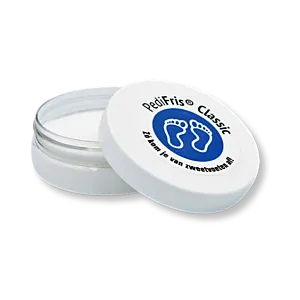
If odours linger in the material, use PediFris® Classic on the dry inside of all pairs of shoes you wear regularly.
If your feet and socks get wet quickly, you should also tackle the sweating on your skin. A shoe treatment does not inhibit sweat production on your skin.
Baking soda can absorb moisture and temporarily mask odours. Remove the powder completely before wearing the shoes again and check first that the material can withstand it.
Vinegar or freezing does not produce predictable results for every material and every source of odour. You should therefore follow the manufacturer’s care instructions and not use home remedies as a substitute for drying, changing and a targeted approach to treating the skin or the shoe.
By “cat urine”, people usually mean a pungent, ammonia-like odour. Such an odour can arise when old moisture, dirt and decomposition products remain trapped in the lining, but the odour alone does not indicate which substance or micro-organism is the cause.
Clean detachable insoles in accordance with the care instructions, allow everything to dry completely, and check whether the lining remains worn or feels damp. If the odour keeps returning, also treat the shoes that you wear alternately.
After use, leave work shoes open, remove any loose insoles and, if possible, switch to a different pair. Closed work shoes often take longer to dry completely.
Take football boots straight out of your sports bag, remove any mud and loose soles, and leave them to air-dry. The separate approach for smelly football boots Take into account intensive use and wet materials.
PediSpray® helps to reduce excessive sweating on the skin of the feet, so that less moisture ends up in your shoes.
Watch out for itching, flaking and cracks between the toes, as these may be symptoms of athlete’s foot. Small pits, soft skin and a strong odour under the foot may be indicative of pitted soles.
Contact your GP if you experience pain, cuts, signs of infection, diabetes or symptoms that persist despite self-care. Also seek medical advice if you experience sudden or significantly increased sweating.
.svg)
 Jan henk Crouwers
Thomas De Jager
Roger Schmidt
Wicher
IdKvH
Helmut Tijssen
Bernd
Pim
Jan henk Crouwers
Thomas De Jager
Roger Schmidt
Wicher
IdKvH
Helmut Tijssen
Bernd
Pim
 Bernd
Bernd
 roger christiaen
Brief answers on drying, home remedies, strong odours and different types of shoes.
Smelly shoes are usually caused by a combination of sweat, dead skin cells and bacteria in a warm, damp lining. Sweat itself has hardly any smell; the odour is mainly caused by bacterial breakdown.
Allow shoes and loose insoles to dry completely, change pairs daily and treat the lining if odour returns. If your feet and socks get wet quickly, try to reduce sweating on the skin.
Baking soda can temporarily reduce moisture and odour, but the effect varies depending on the shoe. No reliable general results have been demonstrated for vinegar or freezing; always check the manufacturer’s care instructions.
A pungent, ammonia-like odour can develop when old moisture and dirt remain trapped in the lining. The odour alone does not indicate a specific cause; clean the shoe, allow it to dry completely and check your feet for any skin conditions.
Unfasten work boots after use, remove any loose insoles and allow them sufficient time to dry. If possible, alternate between pairs and treat the lining as well, as closed work boots can trap heat and moisture for long periods.
Take football boots straight out of your sports bag, remove any loose insoles and do not allow mud or moisture to remain in the lining. Allow the pair to dry completely before wearing them again.
Shoe odour may be associated with a skin condition if you also notice itching, flaking, cracks, pain, sores or small pits on the sole of the foot. If symptoms persist, or if you have diabetes or signs of infection, seek advice from your GP.
Written by Judith de Jong (Content owner, PediFris®). Medically reviewed by Sébastien Dequidt, podiatrist. Updated on 20 August 2026. We base our advice on foot care practice and on the medical sources listed below.
Worried about a persistent complaint, fungal nail, athlete’s foot or excessive sweating? Consult your GP, podiatrist or chiropodist.

.svg)