

How to stop sweaty feet in sandals
You put on sandals because your feet need air. And yet: after an afternoon in the sun, the insole feels clammy, and sometimes the pair starts to smell sooner than your winter shoes do. Open footwear helps, but the material of the insole and how much you sweat on your skin determine how fresh you really stay.
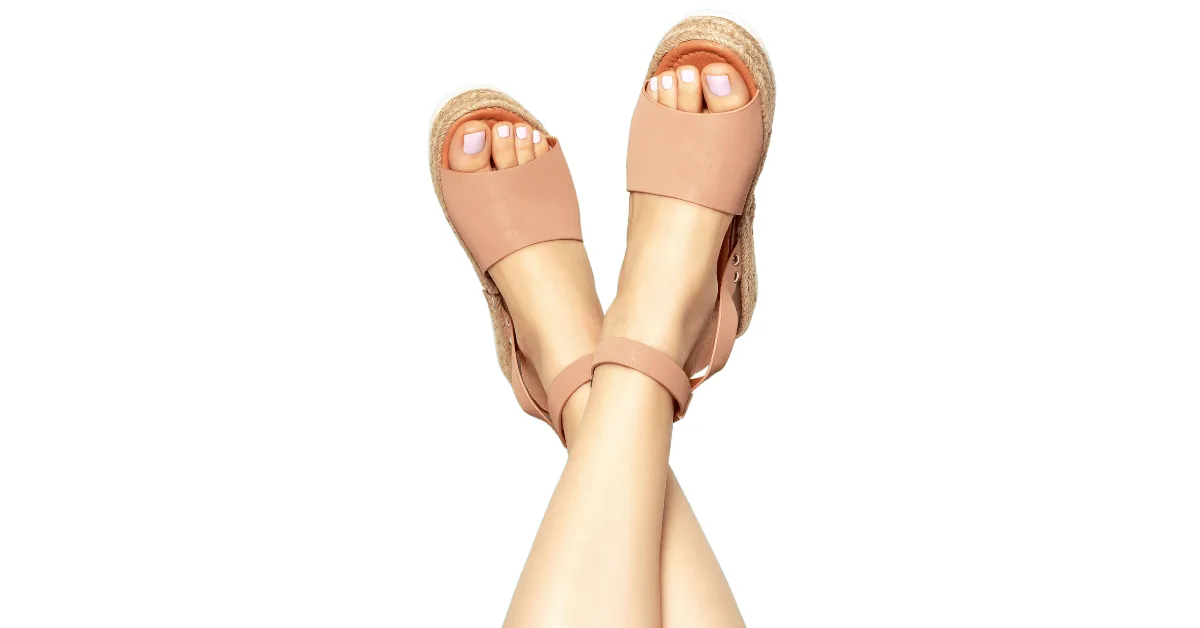
Changing, airing and allowing the skin to breathe help, but PediSpray® Walking barefoot is the most natural step.PediFris® Classic only if the powder remains in place, for example in a sock.
What to do about sweaty feet It does not depend solely on the footwear. If you experience problems in several types of shoes, start with the general routine for skin, socks and shoes.




Open sandals, yet still clammy feet
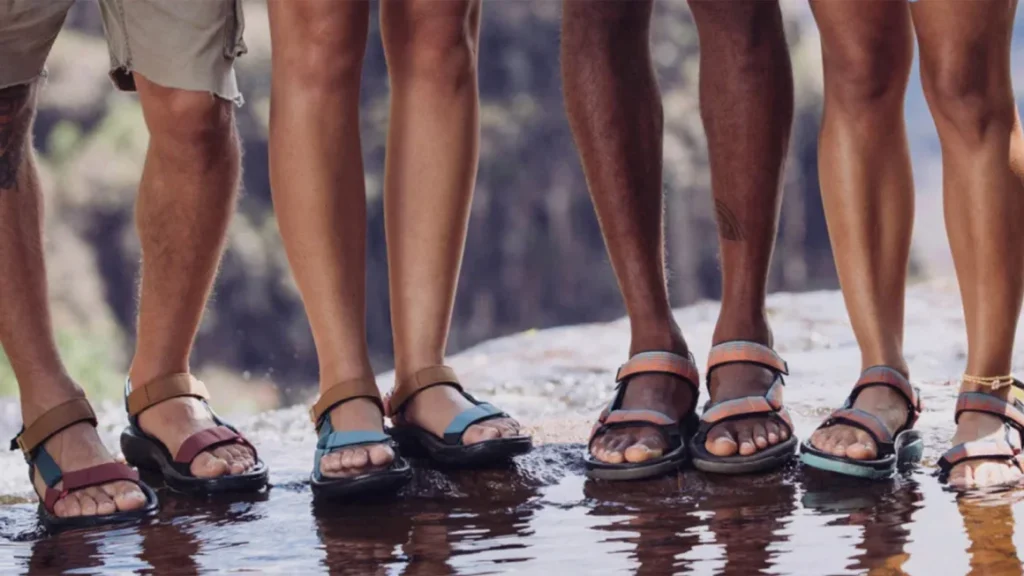
You choose sandals precisely because they are ‘open’. Yet, after a hot afternoon, the footbed often feels sticky, and the pair starts to smell sooner than you’d expect. Not because open shoes are useless, but because ventilation alone isn’t enough.
Synthetic insoles trap heat and moisture; leather or cork absorb moisture better and release it later. When barefoot, sun exposure and friction are added to the mix. Fresh sweat hardly smells at all. The odour only develops when bacteria on the skin and in the sole break down that moisture.
And that is precisely where the pitfall lies: even a sandal with a fine, breathable footbed does not deactivate your sweat glands. If you want your feet to be consistently drier, you must also inhibit sweating on the skin, not just rely on more ventilation holes.
What you can do to combat sweaty feet in sandals
Shoe shops are right to recommend better materials and changing your shoes. That helps. But on days when your feet get sticky, during long walks or if you naturally have sweaty feet, the skin remains the root cause. That’s why the order is: first, reduce sweating; then, ensure a clean footbed; and use powder only if it really stays in place.
Reduce sweating on the skin
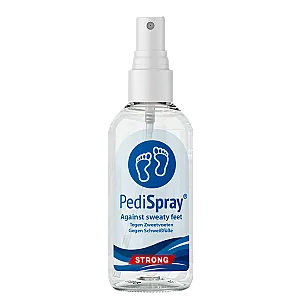
Apply PediSpray® (Regular or Strong) in the morning to clean, dry feet and allow it to be absorbed. Unlike a foot deodorant, which mainly masks odours, this antiperspirant reduces sweat production. This is particularly valuable when wearing open sandals: you often walk without socks, so your skin is your only ‘buffer’.
Remove bacteria from the sole of the foot
After a hot day, the footbed becomes a breeding ground for bacteria. Wipe or rinse the straps and sole (follow the manufacturer’s advice), allow the sandals to air out and dry them thoroughly before wearing them again. On long days, alternate between two pairs: this prevents moisture from becoming trapped.
Powder only where it remains in place
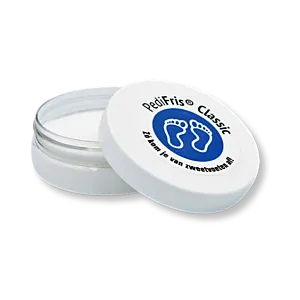
PediFris® Classic is intended for use where it comes into contact with the skin or lining. In open sandals worn on bare feet, loose powder will fall out. If you are wearing socks: sprinkle it into the sock. Without socks: avoid using powder and stick to the spray plus cleaning.
.svg)
 Bernd
Bernd
★
★
★
★
★
19 Aug. 2026
"Fast delivery, fantastic product :)"
Translated
Pim
★
★
★
★
☆
18 Aug. 2026
"Dear Pedifris team,
The order was delivered on time. I’ve now used it twice – both the strong spray..."
Translated
 Bernd
Bernd
★
★
★
★
★
17 Aug. 2026
"I’ve only been using it for 3 days, but it worked from the very first application. I’m really please..."
Translated
 roger christiaen
★
★
★
★
★
13 Aug. 2026
"I’m satisfied and have bought it for the second time – thank you"
Translated
Filip
★
★
★
★
★
12 Aug. 2026
"Ordered and delivered the very next day.
Been using it for a few days now and am surprised by how we..."
Translated
Patrick Storm
★
★
★
★
★
08 Aug. 2026
"Very well organised "
Translated
N. Kerkhof
★
★
★
★
☆
06 Aug. 2026
"After I reported that my order had never arrived, I got in touch with Pedifris. Once they’d sorted o..."
Translated
Anneke Segaert
★
★
★
★
★
05 Aug. 2026
"No more sweaty feet after 1 week and odour-free shoes"
Translated
Rob Jochems
★
★
★
★
★
29 Jul. 2026
"I’ve found it extremely helpful. Top-notch stuff."
Translated
Fresh feet start with the skin, not just in the shop
A better footbed helps wick away moisture. PediSpray® ensures that less moisture builds up in the first place. Together, they make a day in summer sandals feel much more comfortable.
Materials, hygiene and habits that make all the difference
When making a purchase, a breathable footbed helps: leather or cork often feels drier on hot days than smooth synthetic material. An open sandal with a synthetic footbed can feel surprisingly clammy, whilst a more closed-toe model with a good leather footbed is actually quite comfortable. PediFris does not sell sandals; however, it does help to understand why ‘open’ is no guarantee.
Your routine will then determine how much odour returns. Dry your feet thoroughly, including between the toes, before putting on sandals. Do not store a damp pair in a bag. Wash the footbed and straps with lukewarm water and mild soap if they feel sticky or dirty, and allow them plenty of time to dry thoroughly. When travelling or during a heatwave, a second pair is not a luxury, but a way to prevent bacteria from thriving.
Everyday household remedies (freezer, bicarbonate of soda, mint tea) can temporarily reduce odour. They do not solve the problem of excessive sweating. If you want less sweaty feet rather than just less odour afterwards, you need to start with the skin itself.
Why PediSpray® takes centre stage here
Competitor blogs often end with “buy a better sandal” or “use powder or spray”. Our angle is more focused: in open sandals, the skin is exposed, so the main benefit lies in reduced sweating. PediSpray® antiperspirant (Regular or Strong) is designed for this purpose, not to mask odours with perfume.
PediFris® Classic shoe powder remains useful in closed shoes or with socks. In open sandals without socks, it is not honest advice to promise that powder will stay on the soles of the feet: it won’t stay in place. So only use ‘Classic’ if you are wearing socks, or stick to PediSpray® plus a clean, dry footbed.
This way, you can combine the good advice given by some shoe shops (material, changing shoes, drying) with what they cannot solve: overactive sweat glands on bare feet in the sun.
When should you have sweaty feet in sandals assessed?
Do your feet remain soaking wet despite good care, or do you notice cracks, athlete’s foot, a fungal nail infection or open sores? Have them checked, especially if you have diabetes. Extreme excessive sweating (hyperhidrosis) sometimes requires medical advice in addition to self-care. Further background:what to do about sweaty feet en Thuisarts.nl on excessive sweating.
Ready to do it the other way round: skin first, then the footbed? Start with PediSpray® for sweaty feet. If you wear socks with sandals, add PediFris® Classic in the sock.
Frequently asked questions about sweaty feet in sandals
From “why do my feet sweat in open sandals?” to choice of materials and odour from the footbed: the questions that keep cropping up in search results.
Why do my feet sweat in sandals?
Feet sweat in sandals because the sun, heat and friction keep the skin moist, even if the sandal is open and well-ventilated. A synthetic footbed often retains that moisture for longer than leather or cork, causing bacteria to produce odours more quickly.
Do open-toed sandals actually help with sweaty feet at all?
An open sandal is often more helpful than a closed shoe, but is no guarantee against sweaty feet if the footbed and skin remain damp. Combine a breathable pair with reduced sweating on the skin using PediSpray® and good dryness or hygiene.
Which sandals are best for sweaty feet?
Where possible, choose a breathable footbed made of leather or cork that can absorb and release moisture, rather than smooth synthetic material that feels clammy more quickly. No style completely stops sweating: material and skincare go hand in hand.
How do you remove sweat odour from sandals?
Clean the footbed and straps, rinse them out and allow the sandals to dry completely, preferably by alternating with a second pair. Temporary odour-masking tricks can sometimes help, but the best way to prevent new odours is to ensure there is less moisture on the skin before putting them on again.
Does PediFris® Classic powder work in sandals?
PediFris® Classic only works in sandals if the powder stays in place, so it’s not suitable for bare feet in open sandals where it falls out. If wearing socks, sprinkle Classic into the sock; without socks, use PediSpray® along with a clean, dry insole.
When should I see my GP if I have sweaty feet whilst wearing sandals?
Please contact us if you experience pain, open wounds, signs of infection, diabetes, or extreme excessive sweating that does not improve with self-care. Find out more about what to do about sweaty feet and visit Thuisarts.nl.
About the author & sources
Written by Judith de Jong (Content owner, PediFris®). Medically reviewed by Sébastien Dequidt, podiatrist. Updated on 18 August 2026. We base our advice on foot care practice and on the medical sources listed below.
Worried about a persistent complaint, fungal nail, athlete’s foot or excessive sweating? Consult your GP, podiatrist or chiropodist.
Sources
- NHS: Excessive sweating (hyperhidrosis): www.nhs.uk

.svg)