
Wash your feet with mild soap
Wash around the cuticles as well and rinse off any soap residue thoroughly.
Toe cheese is a sour-smelling build-up of skin flakes, moisture, bacteria and dirt under the toenail. It can be removed with gentle cleansing and careful nail care.
If the odour returns, check your socks and shoes as well. If you experience itching, flaking or small pits, check whether another skin condition better describes your situation.
‘Toenail cheese’ is the informal name for a strong-smelling build-up of skin flakes, skin secretions, moisture, bacteria and dirt under the toenails.
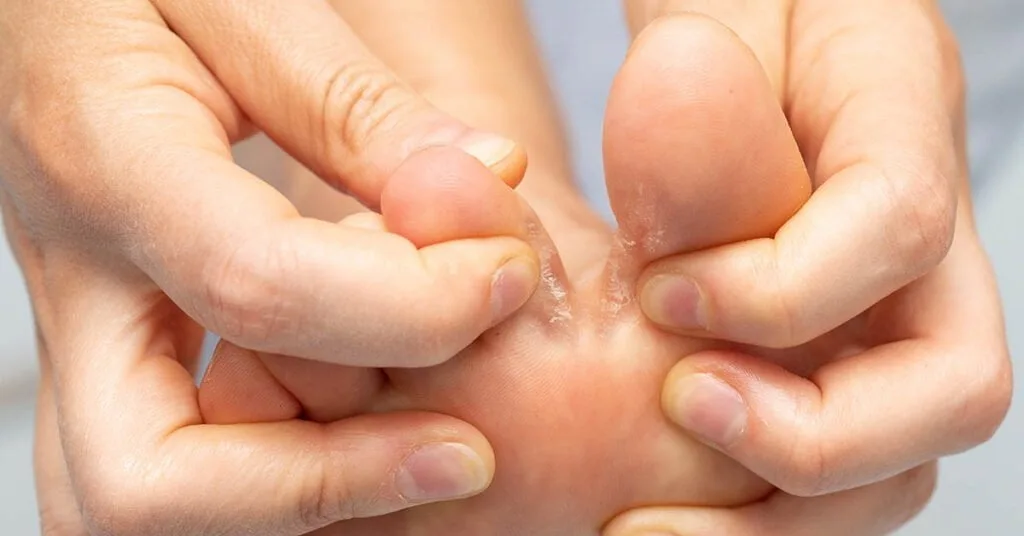
The image in this photograph actually helps to clarify the distinction: white, soft or flaky skin between the toes is more characteristic of athlete’s foot then in the case of build-up under the nail.
Remove the visible build-up without damaging the skin beneath the nail.
Wash around the cuticles as well and rinse off any soap residue thoroughly.
Do this after showering using a soft nail brush. Do not use any sharp objects under the nail.
Only put on clean socks once the skin and nail edges are dry.
This helps to minimise moisture, heat and recurring odours in your daily routine.
Accumulation and a cheesy odour under the nail are characteristic of ‘toenail cheese’. Itching, flaking, white softness or cracks between the toes are more commonly associated with athlete’s foot.
Do you see lots of small pits on the soles of your feet, particularly in areas subject to pressure and accompanied by a strong odour? If so, take a look at What to do about pitted keratolysis.
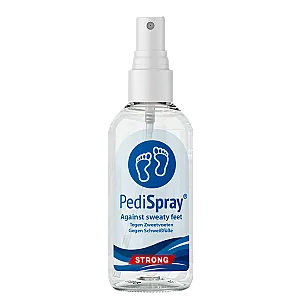
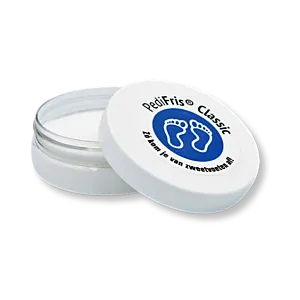
Carefully remove the build-up from under the nail. Then use PediFris® Classic in shoes when the odour returns and add PediSpray® Use if your feet and socks get wet easily.
Wash your feet with mild soap and use a soft nail brush after showering. Do not insert any sharp objects under the nail.
Only put on clean socks once the skin and nail edges are dry. Change damp socks earlier in the day.
Sprinkle a small amount into the shoe and distribute the powder by shaking briefly. Classic neutralises foot odour and shoe odour and tackles the source of the odour within the footwear.
Apply the spray in the evening to clean, dry skin on the feet and allow it to dry before putting on socks.
.svg)
 BK
BK
 G.W.
Jan henk Crouwers
Thomas De Jager
Roger Schmidt
Wicher
IdKvH
Helmut Tijssen
Bernd
Pim
G.W.
Jan henk Crouwers
Thomas De Jager
Roger Schmidt
Wicher
IdKvH
Helmut Tijssen
Bernd
Pim
Seek advice if you experience pain, redness, small wounds, a nail that is lifting or severely discoloured, diabetes, or a build-up that keeps recurring despite careful cleansing.


Frequently asked questions about Tenenkaas: what is it and what does it help with?
Brief answers on recognising, treating and distinguishing this condition from related foot problems.
Toe cheese is a strong-smelling build-up of skin flakes, skin secretions, moisture, bacteria and dirt under the toenails. It is a colloquial term and not a medical diagnosis.
Wash your feet with mild soap and, after showering, gently clean around the nail edges with a soft nail brush. Dry thoroughly and do not use any sharp objects under the nail.
The cheese-like odour is caused by bacterial breakdown products in the moist build-up under the nail. Some of these odour-causing substances are also present during the maturing of cheese.
No. Toe cheese is usually a build-up under the nail. Itchy, flaky or white, soft skin between the toes may be a sign of athlete’s foot.
No. Toe cheese is found under the nail. Pitted keratolysis refers to small crater-like indentations on the sole of the foot and requires a different approach.
Keep the edges of your nails clean, dry your feet thoroughly, put on clean socks every day and allow your shoes to air out. Also treat any odour that lingers in your shoes.
Start with PediFris® Classic when odour returns to socks and shoes. If your feet get wet quickly, use PediSpray® on the skin as well.
Written by Judith de Jong (Content owner, PediFris®). Medically reviewed by Sébastien Dequidt, podiatrist. Updated on 24 August 2026. We base our advice on foot care practice and on the medical sources listed below.
Worried about a persistent complaint, fungal nail, athlete’s foot or excessive sweating? Consult your GP, podiatrist or chiropodist.

.svg)