

Sweaty feet
Less perspiration, more everyday comfort.
Read moreYou wash your feet, put on clean socks, and yet a strong odour returns as soon as you take your shoes off. That does not automatically mean your feet are dirty. Foot odour usually occurs when bacteria break down sweat and skin cells.

Tackle smelly feet at the source of the odour: first on the skin and, if the odour lingers there, also inside your shoes.

Fresh sweat has hardly any smell. Foot odour occurs when bacteria break down sweat and skin cells on your feet. Heat and moisture accelerate this process.
Washing helps temporarily, but odours can linger in socks, insoles and shoes. That is why a lasting solution requires attention to both your skin and your shoes.
Find out which approach is best for sweaty feet, smelly feet, smelly shoes and other common complaints.
Less perspiration, more everyday comfort.
Read more
Causes, practical tips and products to tackle foot odour and shoes.
Read more
Tackle stubborn odour where it really starts.
Read more
Extra care for sensitive and affected soles.
Read more
Support clean skin and fresh foot comfort.
Read more
Support neat, strong and well-cared-for nails.
Read moreThe characteristic foot odour only develops when bacteria break down sweat and skin debris.
Warm, moist skin provides the conditions in which odour-causing bacteria can thrive.
Moisture and odours linger in the lining and insoles and may reappear after the shoes have been worn.
Thoroughly washing and drying your feet reduces moisture and skin debris. If a strong cheesy smell remains between your toes, the tips about toe cheese may help.
Start with daily hygiene and then tackle the area where moisture and odour keep returning.
Wash your feet daily and dry them thoroughly, including between the toes. Then put on clean, breathable socks.
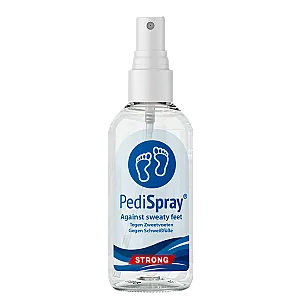
PediSpray® helps to reduce excessive sweating and contributes to the antibacterial effect. Use the spray on clean, dry feet.
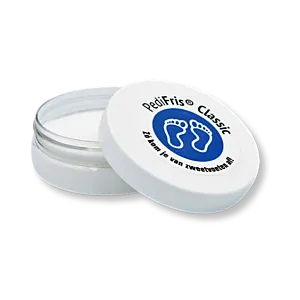
Sprinkle PediFris® Classic into dry shoes. The powder disinfects the inside and also works on your feet whilst you’re wearing them.
.svg)
 Jan henk Crouwers
Thomas De Jager
Roger Schmidt
Wicher
IdKvH
Helmut Tijssen
Bernd
Pim
Jan henk Crouwers
Thomas De Jager
Roger Schmidt
Wicher
IdKvH
Helmut Tijssen
Bernd
Pim
 Bernd
Bernd
 roger christiaen
With sweaty feet, excessive moisture on the skin is the main issue. With smelly feet, odour develops when bacteria break down sweat and skin debris. Both problems can occur at the same time.
If the odour mainly comes from your shoes, the advice for smelly shoes can help you tackle the lining and insoles.
A consistent routine works better than simply masking the odour: keep your feet clean and dry, reduce excessive sweating and treat shoes in which the odour lingers.
Contact your GP if you experience pain, open sores, redness, diabetes or persistent symptoms such as itching and cracks. These symptoms may also point to athlete’s foot.
Reduce excessive sweating on the skin with PediSpray® and treat recurring odours in your shoes with PediFris® Classic.
Practical advice on foot odour, washing, sweating, shoes and when it is advisable to seek medical advice.
Wash and dry your feet thoroughly, wear clean socks every day and change your shoes. If you suffer from excessive sweating, reduce moisture on the skin and also treat any shoes in which the odour lingers.
Washing temporarily removes sweat and skin debris, but bacteria and moisture can remain in socks and shoes. As soon as you wear them again, the foot odour may return.
A consistent routine is most helpful: keep your feet clean and dry, reduce excessive sweating on the skin, treat regularly worn shoes and allow them to dry thoroughly.
Sweaty feet mainly refer to excessive moisture on the skin. Smelly feet refer to the odour caused when bacteria break down sweat and skin debris. These symptoms can occur simultaneously.
A foot bath with vinegar may reduce odour temporarily, but it does not specifically address excessive sweating or odour in shoes. Vinegar can also irritate sensitive or damaged skin.
Contact your GP if you experience pain, open sores, redness, diabetes or persistent symptoms such as itching and cracks. These latter symptoms may also be indicative of athlete’s foot.
Written by Judith de Jong (Content owner, PediFris®). Medically reviewed by Sébastien Dequidt, podiatrist. Updated on 28 August 2026. We base our advice on foot care practice and on the medical sources listed below.
Worried about a persistent complaint, fungal nail, athlete’s foot or excessive sweating? Consult your GP, podiatrist or chiropodist.

.svg)